Ylab is now the RHDDO Makerspace
What happened to ylab? It’s better than ever before! Read all about it here https://www.ylab.ca/about-us/.
Everything on the site was pretty much written by one person, so the site is now TroubleMaker’s blog.
Written by ylab_admin on . Posted in Announcements, Update.
Everything on the site was pretty much written by one person, so the site is now TroubleMaker’s blog.
Written by ylab_admin on . Posted in Announcements, Events, Post-Event Report, Uncategorized, Update.

When a workmate goes heavy metal
For a bit of outdoor practice welding, I made a wooden mount to securely hold a vise to an old workmate.
First step: gather up some scrap lumber to make a nice base that the top surface of the workmate can really grip into. No movement up or down.

It’s ugly but it’s solid. Yes, those old workmates were still made in Canada.

The problem: after a bit of sparking and arc-ing and metal melting, there are some nice scorch marks on the mount. Not good. I’d like that old workmate to last.

Fortunately, there are some other scraps around. Metal and wood.
First step: cut out a thick piece of board to make it a nice rigid surface. Build up the underside the same way as the vise mount in the pictures above so that it has a nice, strong hold from the workmate.

Pro tips:
Next: some scrap sheet metal. What I had on hand is a little too thick for the metal shear in our home at the DDO. Break out the reciprocating saw with a metal blade. Cut to the size or the surface board plus 2 inches on each side.

That saw leaves some rough edges. File’em down.

Next, take it to the metal brake to bend the edges. 1 inch on each side. Did I mention we have an awesome metal brake at the DDO?


Perfect! A nice top that covers the edges.

Drill a few holes for mounting things.


Yeah, yeah, I know. The vise is mounted a little inboard. Did that on purpose for more stability. The workmate is not the most stable thing in the world. I can add another set of mounting holes later.
That worked nicely. So why not take it a step further for even more versatility??

There you have it – the Metalwork-mate.
Now I can get back to more welding practice. I need it, as evidenced by the hardy hole I welded to the end of the anvil.

Closer inspection of the weld on one side of the base indicates a little too much power applied. The hardy-hole hole.

Oh well. At least I have a nice workbench for more practice.
Written by ylab_admin on . Posted in Announcements, Post-Event Report, Radio, Uncategorized, Update.

Can it get anymore Canadian than this?
Long-time members and readers may remember the Great Canadian Alligator Clip and how we put it to good use keeping some librarians nicely grounded.
What could we do for a patriotic encore?
The answer came to us from ylab friend John/VE3IPS. We were storing some old radios in a shed, and sent him this picture.

John’s reply: “Luv the snow shoe antenna….40m is open. Work some”
40 metre? At that length? John may be the McGyver of antennas, but in this case, he’s out of his mind… in a different way than he’s usually out of his mind,
Nevertheless, challenge accepted.
A quick measurement of the length, a basic calculation, and we figured that the pair was not to far from the ideal length for a 6 metre dipole.

The tails of the snowshoes are hollow, and just a bit smaller than a half-inch bolts diameter. Perfect. The magnesium is so soft that with just a bit of torque, the bolts nicely tap themselves in.

From there, strip some coax and tie in the ends of both shoes

Now bolt the shoes to a stand.

, and we have something that looks… nah, I can’t call this reasonable.

We hooked it up to our handy little nanoVNA, and it gave us an initial SWR of 4.4. But that’s down in the basement, too close to other metal object. Tighten the connectors, a bit more jiggery-pokery of the cables, better location and we got it down to 2.3. Best result, as predicted, is on the 6 metre band.
Another radio friend John/VE3BOF brought in a more expensive SWR meter and confirmed the 2.3 measurement. And being the nice guy he is, he also brought in a radio that supports 6 metre.
We put the antenna outside on a cold snowy evening and to try it out. Sloth, expediency and the lack of a decent extension cable kept the antenna pretty close to ground level.

The results? We were receiving!
Transmitting was another matter. By dumb luck, VE3NRT was on a 6 metre net, operating from about 20 km away. With some repetition, he was able to hear us and make out what we were saying.
We’re guessing the shape of the antenna, what with all the holes and different paths to the tip, made transmitting a bit of a disaster.
Would a higher location make a difference? That research will have to wait until spring. If you look at the bottom right of that last picture, there’s some white stuff on the ground. Those snowshoes are going back to their original use.
Bottom line: if you want an emergency antenna, pack a roll of wire. You’ll dramatically increase your chance of rescue. Unless, of course, you’re in an area where a good pair of snowshoes would help you trudge out of there.
Written by ylab_admin on . Posted in Announcements, Events, Post-Event Report, Uncategorized, Update.

Hammered. The metal. Not us.
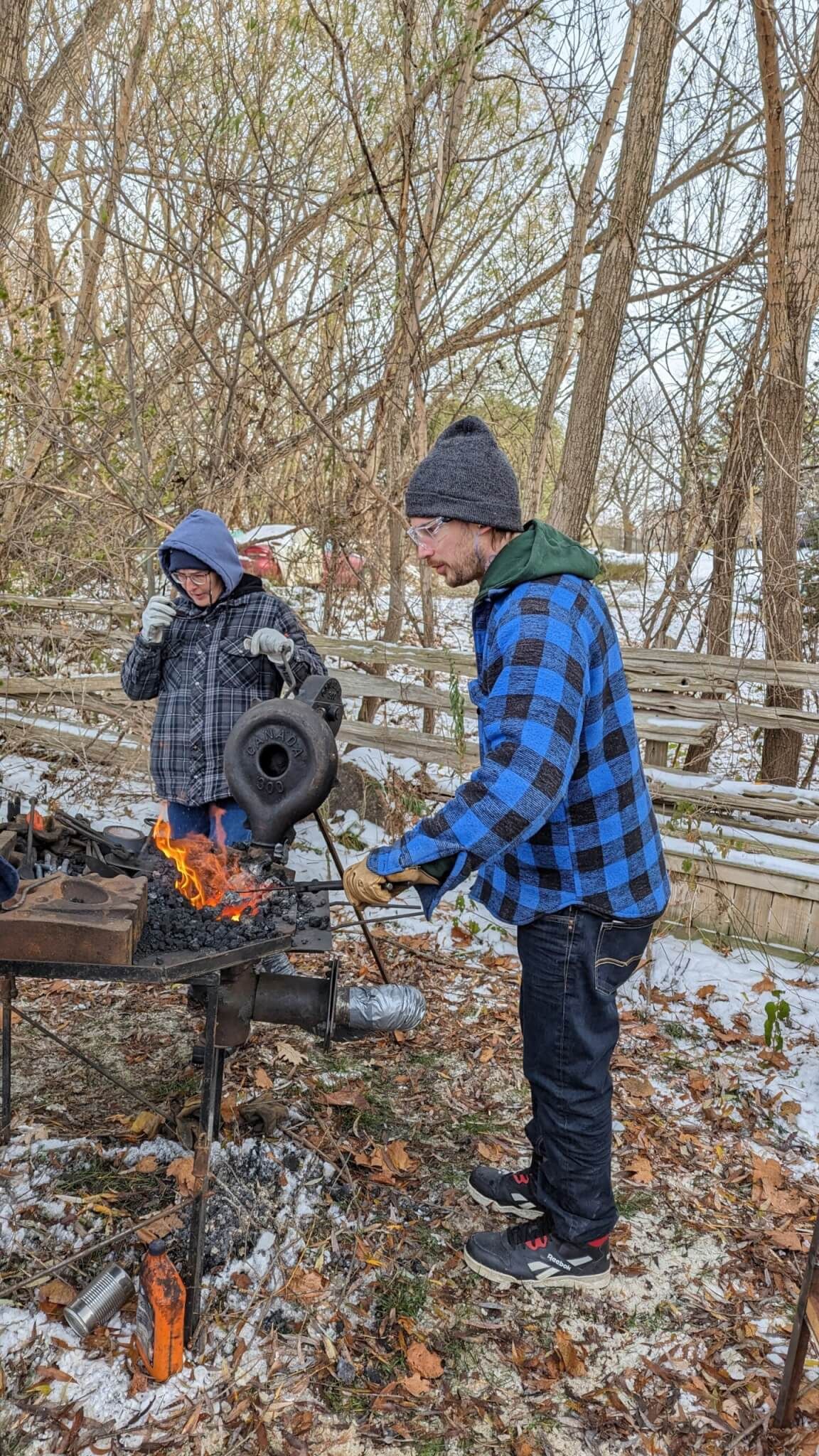
On Saturday November 19th, a few ylab members and friends met up at FireSword Forge in Guelph for an intro to blacksmithing with expert blacksmith David Brandow and our own Metal Master Miro.
Braving the cold and snow was easy – we brought a lot of equipment, with four forges to warm the hands and the steel. Blacksmith Dave provided his outdoor forge, Miro brought two more, and ylab friend Stephen brought a another. Add 7 anvils – enough for everyone to have their own and to put fear in the hearts of the local coyote population – and a pile of tools from Dave and Miro, and we were set for a great day.


Big thanks to Blacksmith Dave and Metal Master Miro for organising everything, to Miro and Stephen for bringing in so much equipment, to Danielle and Karen for the food shopping and prep, and to all the ylab members who spent the long hours making the anvils.
Written by ylab_admin on . Posted in Announcements, Events, Upcoming Event, Update.

YES! OUR FIRST OPEN HOUSE SINCE THE COVID LOCKDOWN!
We’ve finally mustered up the courage to let more people in. Our first post-COVID open house is scheduled for Thursday May 5, 2022 in our home at the David Dunlap Observatory.
If you’ve been before, you still want to come out. We have lots of new tools, and we’ll be announcing some new classes and event nights.
We’re charging a token $5 because:
Register here to reserve your spot!,Space is limited.
Written by ylab_admin on . Posted in Announcements, Uncategorized, Update.

What else did you think we would test with?
We made more progress this week with our Shapeoko2 CNC machine.
But first the bad news: we can’t use the Carbide Command software to run it. Carbide is the manufacturer of the Shapeoko machines. Their software doesn’t support anything older than the Shapeoko3.
So… we’re still using the Easel web-based software. It’s good enough to do the job.
After last week’s initial test with styrofoam, we went full steam ahead with more solid materials.
We started with the easy stuff, MDF, and moved up to plywood and solid pine.
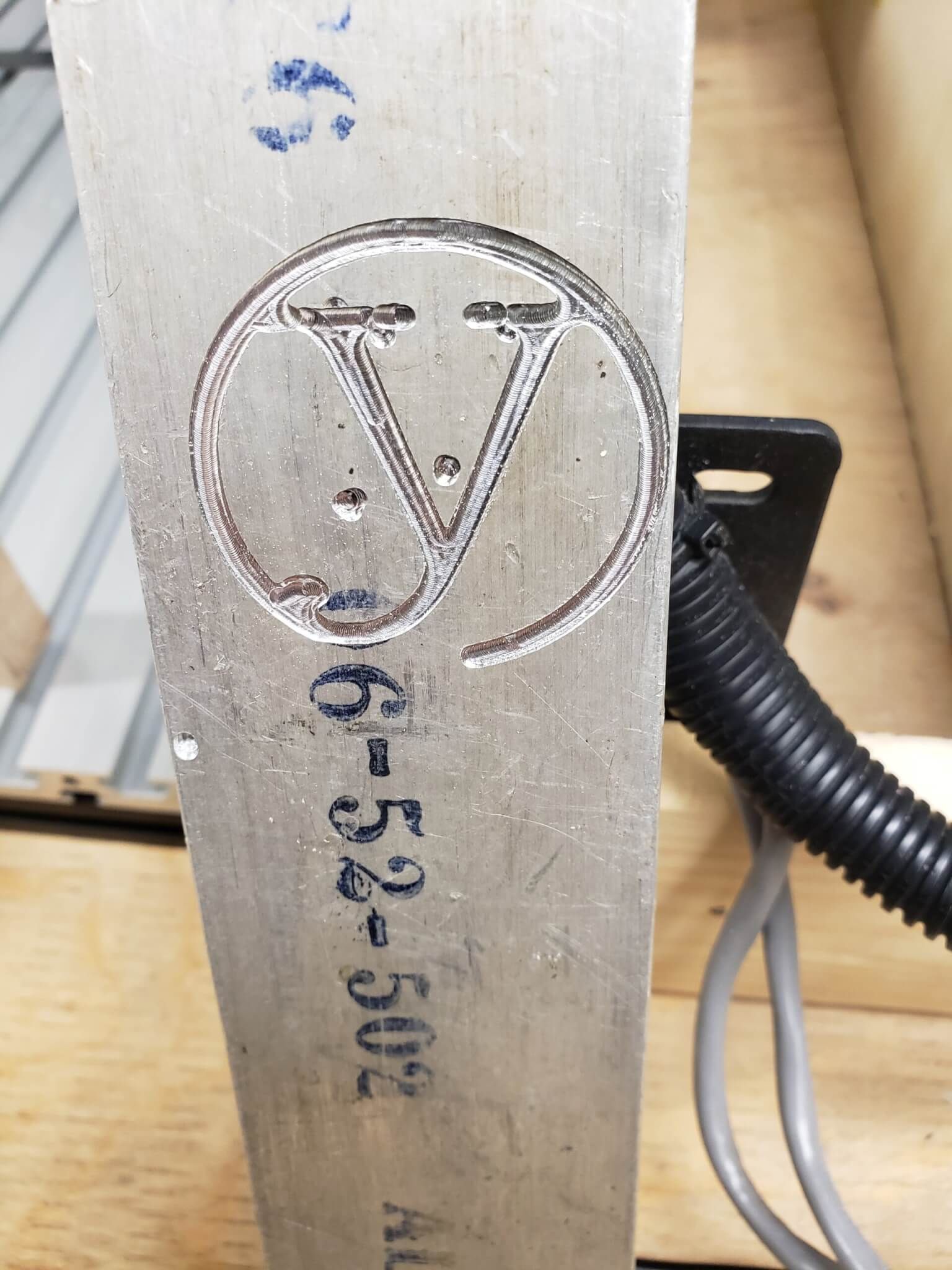
It’s a tradition at ylab to baptise every new machine by having it print the ylab logo. That’s what we did on the first 3D printer we got our grubby hands on, and then with our laser cutter.
We found that the harder the material, the better the results.
Since the carving bits are carbide and rated for aluminum… well, we looked around and found a nice flat piece.

That metal has to be held down firmly. We made good use of Metal Master Miro’s clamping blocks, which we covered in last week’s post.
With the Easel software, we specify the material, and it handles all the speed, cut layer depth and other calculations.

And… it works! The software sets the machine to make more gradual cuts, to it takes longer.
We probably have another week or two of work to finish learning and testing all the options, document things, lay out usage rules and best practices, and set up a course for everyone else to learn.
Stay tuned for more progress and announcements.
Written by ylab_admin on . Posted in Announcements, Uncategorized, Update.

When a laser cutter won’t cut it
Our latest equipment donation is a Shapeoko CNC machine. Thank you Jedi Jay!
After an initial shake-town and successful testing by ylab member Craig and his accomplice Shari, they came in and gave us a quick overview of its operation.
After some test use, we came up with some improvements.
The first step was to get it out of the huge enclosure it came in. Good for sound proofing, but big and awkward to move, and not good when used by a bunch of amateurs who should be watching it all the time. Because amateurs make stupid mistakes. Removing it from the box allows us to work on it. Which we want to do. Unfortunately, the controllers were bolted to the outside of the box, and the wires ran through holes to get to the inside. So everything had to be disconnected. We added a mounting bracket to the side for the controllers and re-wired everything.
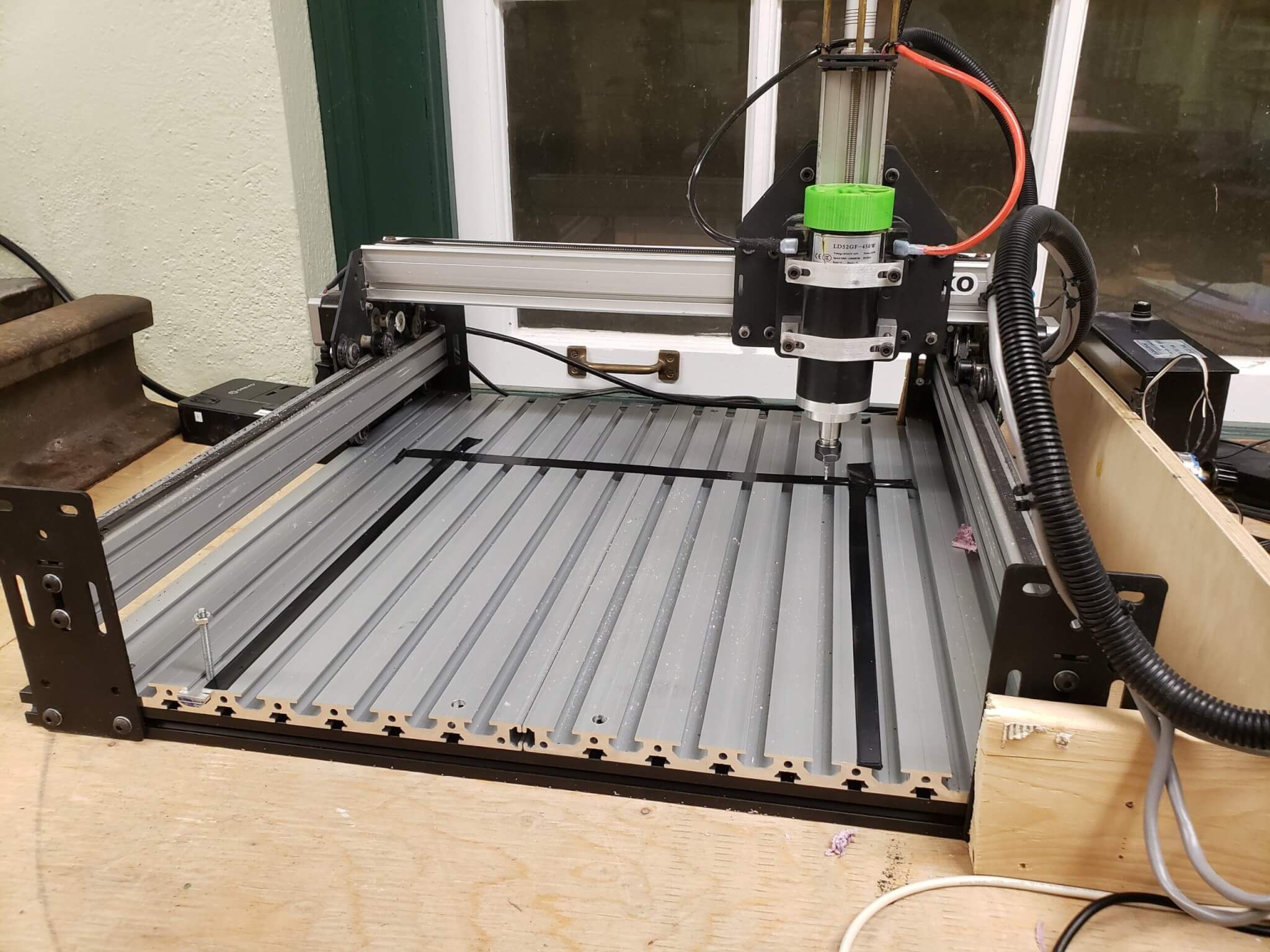
Looking at the bed in the picture below, you can see small channels at the bottom and big channels at the top.

As received, the smaller channels were at the top. The picture is what is looks like after we removed, drilled, flipped and remounted the bed. . Bigger channels give us better support for the material.
Next we need something to tie material down to those bigger channels.

You could 3D print some brackets that will fit in the channels, but plastic won’t hold a screw very well. We want really solid. Metal Master Miro milled out a new set of blocks to perfectly fit the channels, drilled and threaded them, added threaded rods (locked down with the nasty Loctite Red stuff), and cut and drilled a set of metal bars to complete the hold-downs.

The black lines on the bed… the inside of the tape represents the limits of where the milling head can go. So you know where to place your material
We ran our first test using the Easel web site that Shari and Craig recommended. As a first test, we used some styrofoam to reduce the risk of damage.

And whaddya know, it worked perfectly. That’s Easel’s test pattern.
Easel requires a live connection to the web and has some limitations on the free version, so we looked for alternatives.
We found Carbide Create – for creating drawings – and Carbide Motion for feeding Gcode to the machine and controlling it. All nice and free and from Carbide 3D, the Shapeoko manufacturer. The website has documentation, tutorials, a great sample project and other neat software – like for carving circuit board patterns. Carbide will accept .dxf files, which means we should be able to use the 2D tools our members learned in our laser cutting classes – Draftsight and nanoCAD.
That’s our project for next week – getting it running with Carbide. And with material that’s a little more challenging than styrofoam.
Written by ylab_admin on . Posted in Announcements, Events, Uncategorized, Update.

Finally!
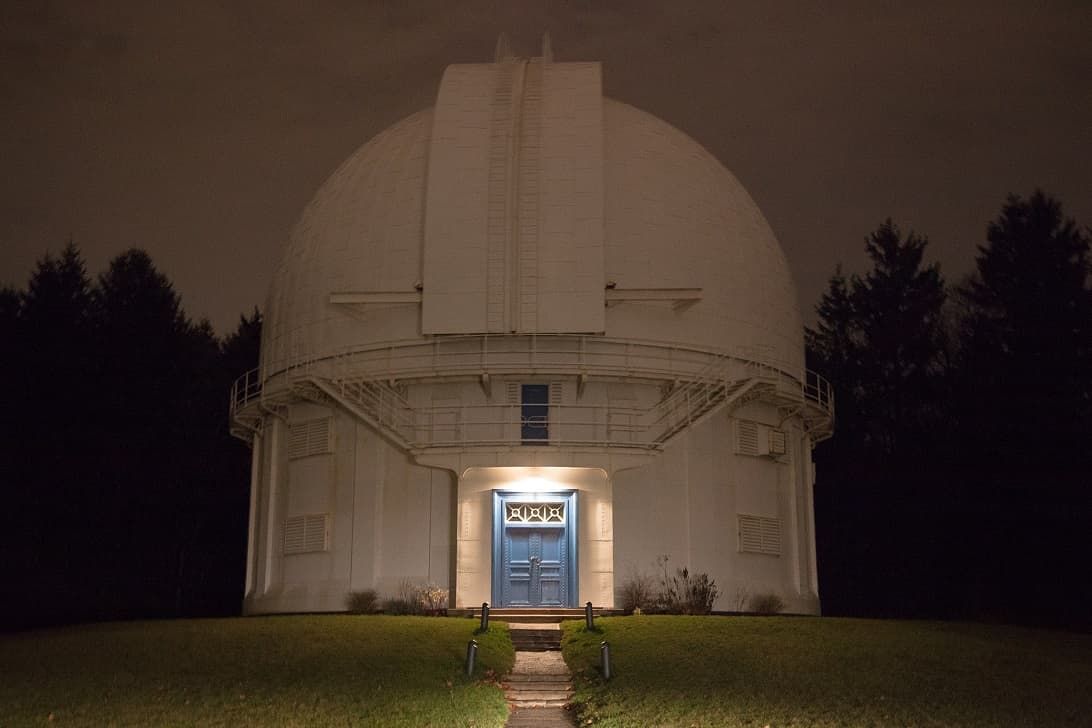
18 long months. That’s how long we’ve been out of our home at the DDO – Richmond Hill’s David Dunlap Observatory.
Mostly, it’s been COVID. But the DDO has not been idle during that time, undergoing a major restoration. We’ll post more about that later.
The DDO is officially a community center of the City of Richmond Hill. Once the provincial COVID rules allowed them to be re-open, we had to work out all our own protocols for access.
And we had to clean up and put things back in order. The restoration made everything…. let’s just say topsy-turvy and leave it at that.
Our members, eager to get back in, jumped at the change to come in, clean up, and get things back in order. Big thanks to Brooke, Craig, David, Daniel, Danielle, Fernando, Karen, Pek, and Ron for all their work.
Our laser cutter – everyone’s favourite tool – and all it’s supporting programs – was brought back to life and tested this evening.
First was testing the CAD program – we will now be using nanocad as the basis for our training.

Then our old faithful laser cutter control PC, after cleaning it up and blowing the dust out, came back to life and did its part.

And finally… would the laser cutter choke on it?

It all worked out great.
We found and put back in order a few things that had gone missing. The signs for our two rooms, for instance.


We don’t plan on running any open houses or guest nights for a couple of months.
Our members have a lot of projects to catch up on, new gear to set up and train on (more on that later), and we need to see how our COVID protocols and other things work out. They’ve all waited patiently – not one of them asked for their money back! – so they deserve some focused time before we open up to more people.
Stay tuned for more announcements and news.
Written by ylab_admin on . Posted in Announcements, Events, Uncategorized, Update.
Not a DDO construction update.
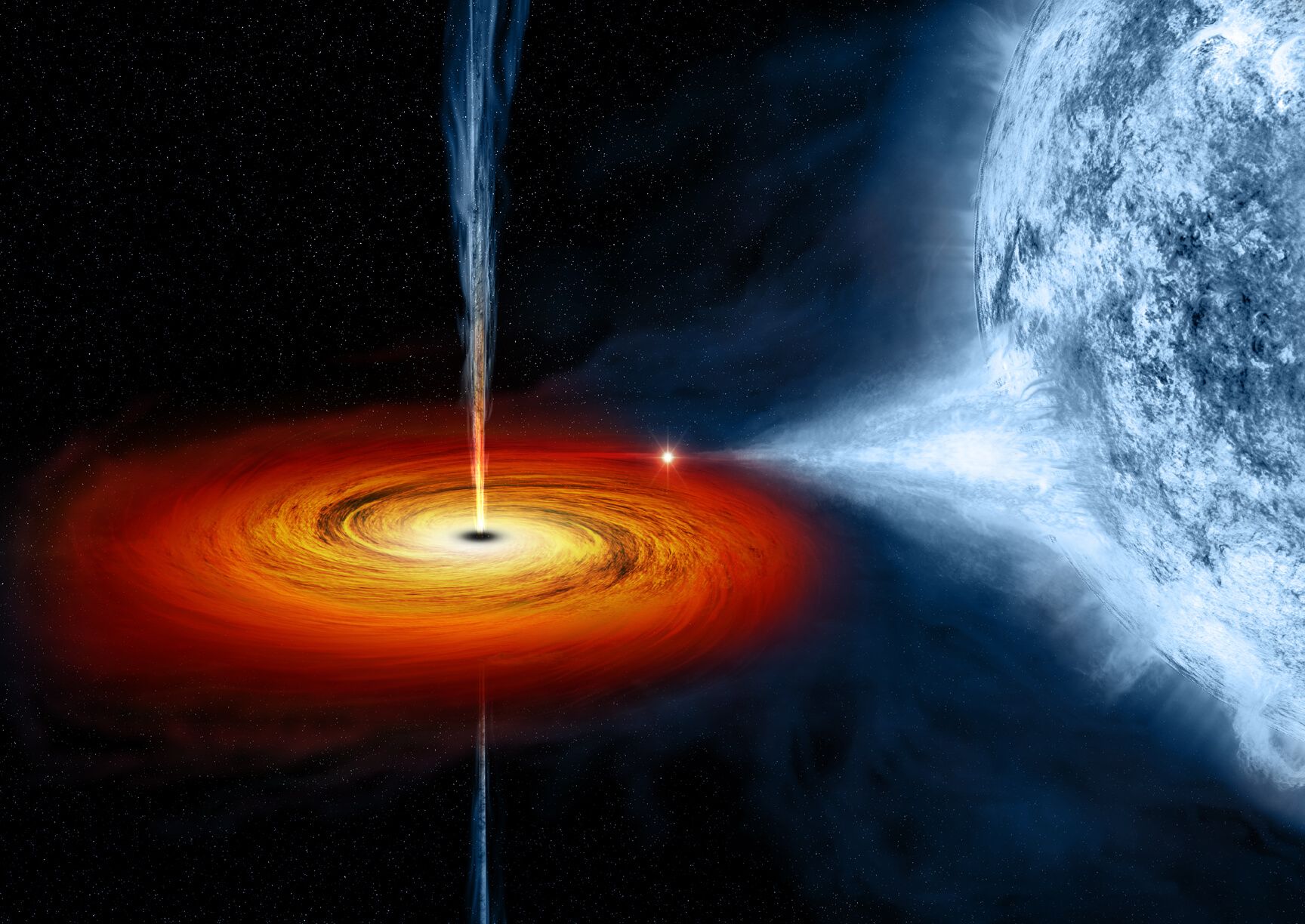
Cygnus X-1, the first X-ray source accepted to be a black hole, is bigger than expected. Possibly the biggest astronomical claim to fame for the giant telescope of the David Dunlap Observatory is its role in the first observations confirming Cygnus X-1 as a black hole.
We haven’t checked lately to see if that big hole they dug around the foundation of the David Dunlap Observatory administration building (our home) has been filled in yet. But that’s not what this is about.
It’s important to understand that it’s not as simple as an astronomer peeking through telescope and screaming “Hey! Look! A black hole!”
According to Wikipedia, a series of mathematicians and astronomers used Einstein’s theory of general relativity’s field equations to predict the existence of ultra-dense collapsed stars – or singularities – that we now call black holes. They would be difficult to detect, because the gravity is so intense that not even light could escape.
In 1964, rockets equipped with geiger counters identified a source of X-rays as one of the strongest X-ray sources seen from earth. That source was ultimately called Cygnus X-1
In 1970, the Uhuru satellite showed fluctuations of the X-ray intensity from that same source happening several times a second.
In 1971, astronomers detected radio emissions that didn’t make sense from the same source. They were looking at a star as the source of the X-ray emissions. But the star they were looking at could not generate the amount of X-rays they were seeing. The star must have a companion that could cause the necessary heating to generate those X-rays. An invisible companion.
In 1971, independent observations at the David Dunlap Observatory and the Royal Greenwich Observatory announced the discovery of a “massive hidden companion” to the star – and this is widely accepted as the first confirmation of the existence of a black hole.
Astronomers could measure the effects of a black hole, but they could not see one – until 2019, when an international network of telescopes co-operated to capture the first image of a black hole and its shadow. It wasn’t a direct observation. It was an accumulation of a massive amount of data from all these radio telescopes. How much data? It took a half a ton of hard drives. So much data that it was faster to fly the hard drives to MIT than to transfer the data over the Internet.
Scientists have continued to study Cygnus X-1, and the latest studies announced in 2021 indicate that it’s farther away and bigger than expected. According to this article, they used a large array of radio telescope dishes scattered across the USA to make the observations.
Cygnus X-1 is now the biggest black hole observed through optical methods, and it’s bigger than the biggest black hole they thought a star in our Milky Way could produce. So it’s back to the old math blackboard to explain it.

The fun never stops.
Image credit: NASA/ Chandra X-Ray ObservatoryC/M. Weiss https://chandra.harvard.edu/photo/2011/cygx1/cygx1_ill.jpg
Written by ylab_admin on . Posted in Announcements, Radio, Update.

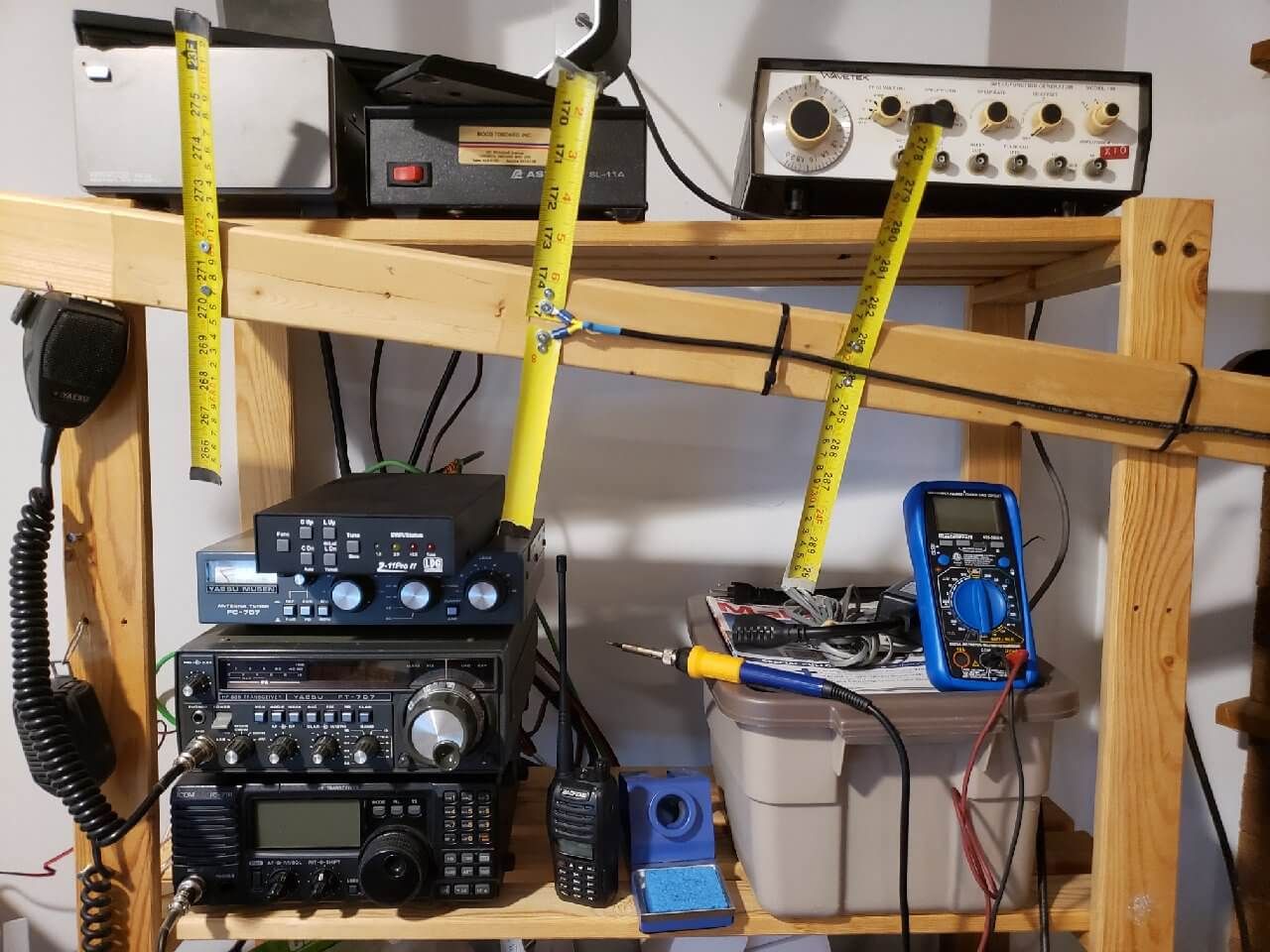
Stuck in your house during COVID? Want to talk to people but don’t want them to see your sequestration hair-do or lack thereof? Wishing you had done more to properly learn electronics? Too much dust on your voltmeter and soldering iron – if you can find them? Think a ham radio license would be interesting, but frightened away by the size of the study guide? And what the heck is that stick with the bits of broken tape measure screwed to it on the picture?
Have we got a deal for you!
Over the last couple of years, ylab has worked with a Scout group to develop our own Canadian Amateur Radio training materials. We’ve distilled what you need to learn to the most essential elements, and we’ve structured the training to focus on the easier parts of the test and still get you a passing grade.
We have slides. We have videos narrating the slides with commentary. We have slides you can go back to when the narrator’s nattering starts to annoy you. We have our own quizzes with hints and explanations to train you for the test.
And it’s free. Free as in beer. Free as in open source. Free as in feel free to criticise… but step up to improve it. That’s what open source is about.
Best of all, we’ve found that the ham radio community has people incredibly qualified in electronics, arduino and all the other stuff we love. And they’re eager to help beginners.
The course is here, and we’ll be adding more material and projects tailored to beginners on our new Radio page. What are you waiting for! Get started!
BTW: that stick with the bits of tape measure is a fully-functional Yagi antenna. Take the class and find out why it’s useful. And regret chucking out that broken old tape measure.